

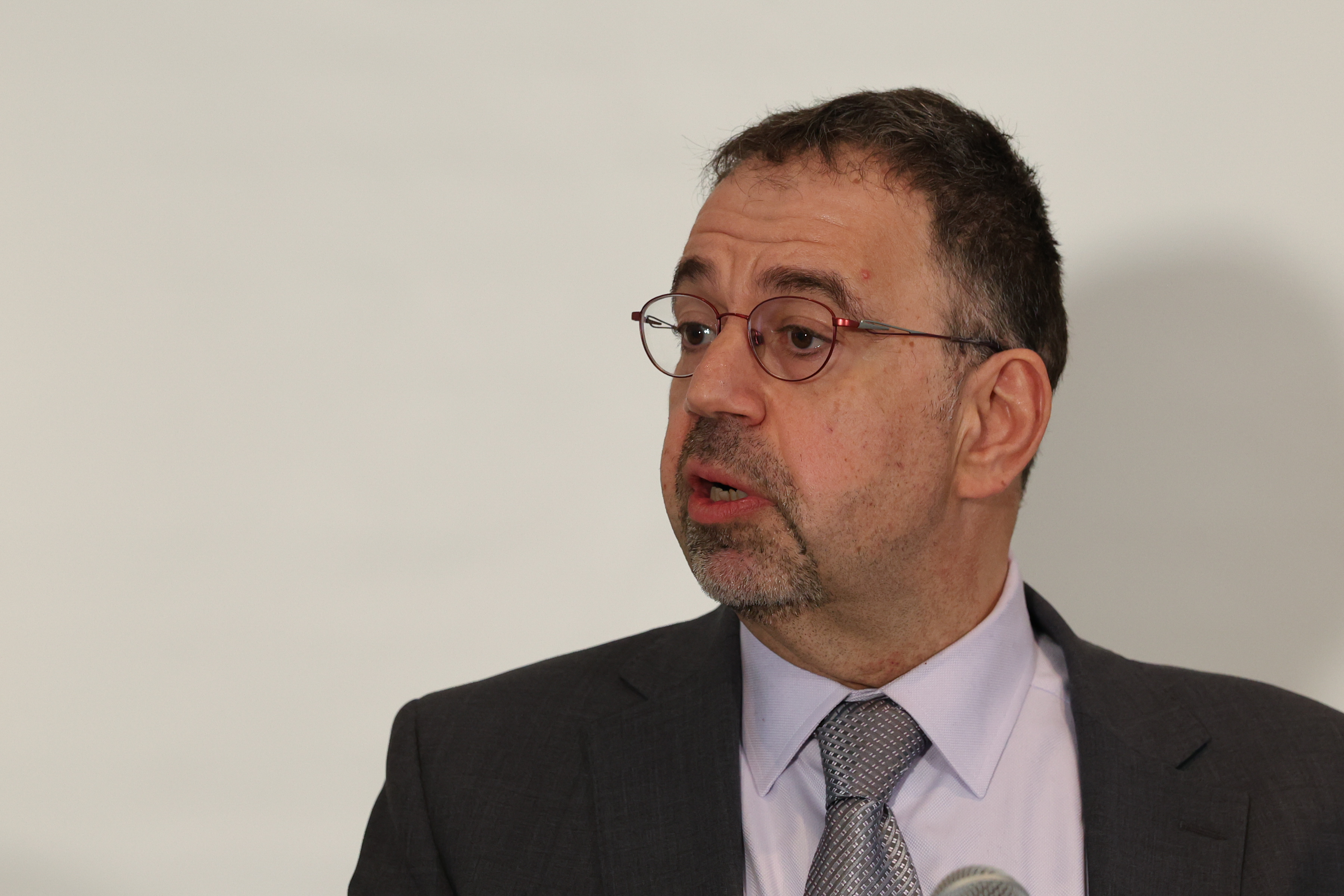
On October 9, 2025, Professor Gerald Easter delivered a talk on democratic developments in Eastern Europe after the fall of the Soviet Union. This talk was featured in a panel of the 2025 Fall Colloquium: Democratic Resilience. Easter is a political science professor at Boston College and teaches courses in comparative politics, with a regional focus on Russia and Eastern Europe. He is also the author of several books, including Reconstructing the State: Personal Networks and Elite Identity in Soviet Russia (Cambridge University Press, 2000), Shaping the Economic Space of Russia (ed., Ashgate, 2000), and Capital, Coercion, and Post-Communist States (Cornell University Press, 2012).

According to Easter, although the end of the Soviet era sparked hopes for democratic progress in Eastern Europe, the transition to democracy has faced socioeconomic obstacles. Democratic institutions, such as multiparty systems, elections, and freedom of the press, emerged in much of the region, and Eastern Europe countries integrated into the European Union. But these developments did not benefit the populations evenly and equally. On the contrary, the outcome was a divide between a highly urbanized elite and a highly traditional class of conservatives. While the former benefited from the achievement of globalization and integration into the European economy, the latter was impacted by inequality and social distress.
Therefore, the recent political shifts in Eastern Europe manifest the emergence of populist leaders who advocate ultra-nationalism, traditionalism, and cultural conservatism. This shift stands in contrast to cosmopolitanism and liberalism, which the post-Soviet political elites supported. Easter pointed out that the 2008 financial crisis accelerated this shift towards conservatism in Eastern Europe. Easter discussed the cultural and social manifestations of what he called the post-liberal reckoning, adding that Eastern European countries have experienced varying degrees of democratic erosion. He concluded that the future of democracy in Eastern Europe depends on socioeconomic conditions and the balance between elites and local classes.
You can watch the full video of the talk from the Clough Center’s YouTube Channel.
About The Author



Leave a Reply